
For homeowners
Residential solar, designed for the roof you actually have
Quest Solar designs and installs home solar on pitched, flat, steep and older roofs — and handles the engineering, permits, utility interconnection and incentive paperwork with one family-owned team.
Why residential solar with Quest
Lower, more predictable bills
A right-sized system offsets the electricity you buy from the utility. We size from your actual usage and roof, not a generic package.
Designed around real roofs
Multiple planes, dormers, low slopes, flat roofs and shading are common in our region. Layouts are engineered for your structure and local fire-code setbacks.
One accountable team
The same family-owned company handles the site visit, design, permits, installation, inspection and utility sign-off — and is the number you call afterwards.
Ready for what comes next
We plan conduit, inverter and panel capacity so adding a battery, heat pump or EV charger later is straightforward.
How the process works
Roof, panel and bill review
We look at your roof condition, electrical panel, shading and 12 months of usage, and tell you plainly whether solar makes sense.
Design and proposal
You get a layout, production estimate, equipment list and a proposal that shows only incentives your project is expected to qualify for.
Permits and utility paperwork
Engineering, building permits, utility interconnection and incentive applications are prepared and filed for you.
Installation
On-site installation for a typical home takes one to two days.
Inspection and permission to operate
Approvals can take 1–6 months depending on your town and utility. We manage inspections and the utility process until your system is switched on.
Properties this suits
- Single-family homes with pitched asphalt-shingle roofs
- Two- and three-family homes, rowhouses and attached homes with flat roofs
- Steep, multi-plane or partially shaded roofs other installers turned down
- Homes planning a reroof — we can coordinate roofing and solar together
Equipment and products
Solar equipment we commonly design with
- SolarEdge
- Enphase
- Tesla Powerwall
Equipment selection depends on project design and availability. Brand names are trademarks of their respective owners and are shown as text; their mention does not imply endorsement, certification, exclusivity or current availability.

Long-term protection
SolarInsure SI-30: long-term protection from a Certified Provider
Quest Solar is a 2026 SolarInsure Certified Provider. Quest Solar offers enrollment in SolarInsure's SI-30 30-year limited warranty for qualifying residential systems. It is a third-party warranty that sits alongside your equipment manufacturers' warranties.
Not every project automatically qualifies. We confirm eligibility for your system before you sign and give you the warranty certificate after enrollment.
Read the official terms: Solar Insure — Warranties (opens in a new tab) · SI-30 Total terms and conditions (PDF, rev. 01/26) (opens in a new tab)
What SI-30 covers
- Parts and labor to repair or replace defective covered components, such as panels and inverters, for 30 years from the start date
- Battery coverage under SI-30 Battery or SI-30 Total plans, subject to capacity thresholds in the terms
- Transferable to later owners of the property, with notice to Solar Insure
Requirements
- The system must be installed and enrolled by a Solar Insure certified provider (enrollment within 30 days of installation)
- Coverage starts only when Solar Insure issues the warranty certificate, and covers only the equipment listed on it
- Equipment must be on Solar Insure's approved vendor list; single-phase residential systems
- The system must stay connected to the internet with monitoring enabled for the full term, and remain at the original address
Not covered
- It does not guarantee a specific power output
- Roof leaks, roof damage and installation workmanship are excluded
- Weather and acts of God, power surges, pests, theft and unauthorized modifications are excluded
Programs vary by address
Find incentives without the guesswork
Choose your state below. Quest will verify your utility and the programs that may apply before we include anything in your proposal.
Local programs, without the clutter
Explore incentives by state
Choose your state for a clear, location-specific guide. We confirm the current program and utility rules before including an incentive in your proposal.
Geographic service-area overview
Verified November 2026; programs and funding can change. Incentives, rebates and tax credits depend on your utility, location, income, equipment, project details and program funding at the time you apply. Quest Solar does not guarantee eligibility or amounts and does not provide tax advice; consult a qualified tax professional about tax credits.
Proof points
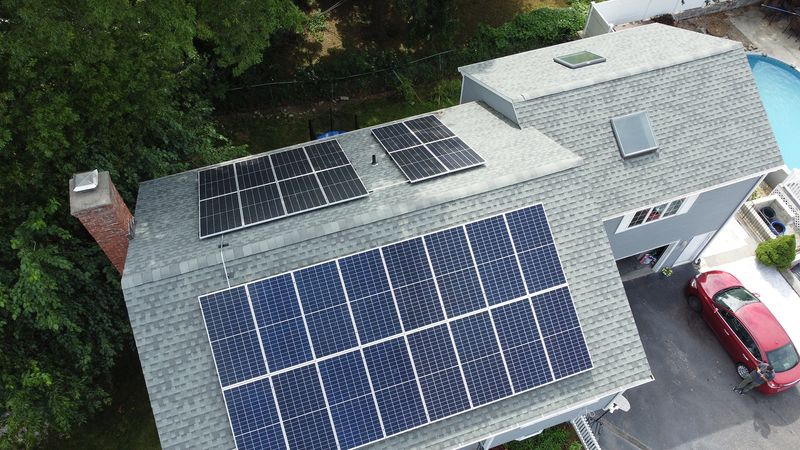
- Installation in New Rochelle, NY: panels following two steep roof planes of a shingled home (shown on questsolar.com).
- NYC General Contractor #619989 and Westchester County license #WC-31021-H18.
- Family-owned since 2018, with more than 20 years of contracting experience.
Where we install
Frequently asked questions
Is there still a 30% federal tax credit for home solar?
No. The federal Residential Clean Energy Credit is not available for expenditures after December 31, 2025, so we do not include it in 2026 proposals. State and utility programs may still apply depending on where you live — your proposal shows only programs your project is expected to qualify for.
How long does a home solar project take?
Installation usually takes one to two days on site. Design, permits, inspections and utility approval typically take 1–6 months in total, depending on your town and utility.
What is the SolarInsure SI-30 warranty?
SI-30 is a 30-year limited warranty from Solar Insure for qualifying systems enrolled by a certified provider. Coverage depends on enrollment, an issued warranty certificate, approved equipment and keeping your system connected to the internet with monitoring enabled. It does not guarantee power output and excludes roof leaks and workmanship. Read the official terms before you decide.
Can you install on a flat roof or an older roof?
Often, yes. Flat roofs use ballasted or attached racking, and older roofs may need repairs or replacement first. We tell you honestly if the roof should be addressed before solar.
Do I need a battery?
Not necessarily. A battery adds backup power during outages and can help with time-of-use rates. We size solar first and show the battery as an option if it fits your goals.
Ready to talk about residential solar?
Tell us about your property. A Quest Solar specialist reviews every request and follows up with honest recommendations.